

 Facebook
 X
 Pinterest
 Copy Link
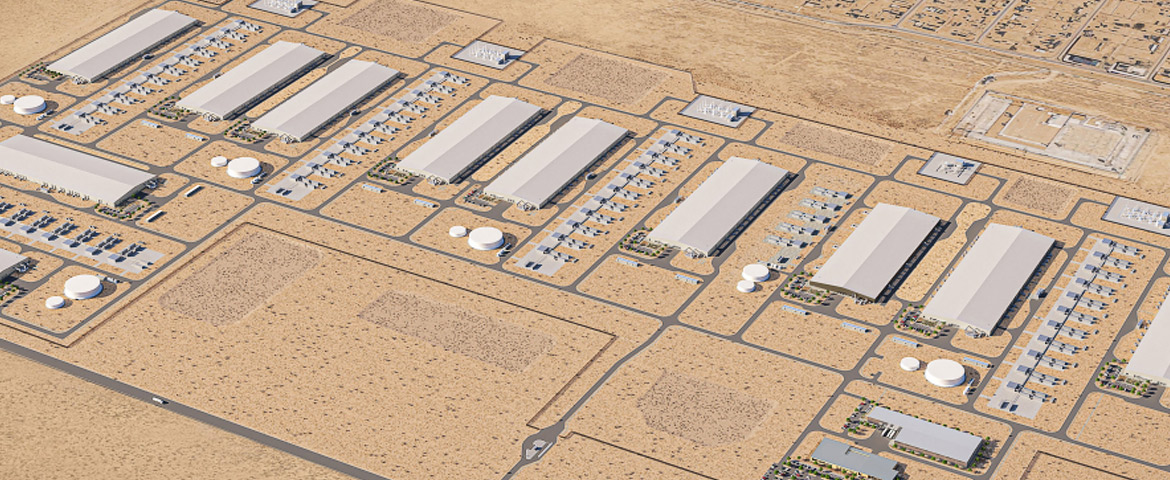
Image Source: Meta Platforms, Inc. / El Paso Data Center Factsheet
Key Takeaways
- Meta (in a $14B joint venture with BlackRock) is building a 1-gigawatt, 1.2M sq. ft. AI data center campus on 1,000 acres in Northeast El Paso (Zip Code 79934) near Stan Roberts Sr. Ave. and US Hwy 54. Operational start is targeted for 2028 The project currently has 2,300+ construction workers onsite (scaling to 4,000+ at peak) driving strong short-term rental demand, alongside300+ permanent operational roles.
- Sustained, healthy equity growth is expected in Northeast neighborhoods like North Hills and Sandstone Ranch. El Paso’s median home price remains intact ($245k–$250k range) and accessible compared to other Texas tech hubs.
- As El Paso’s largest private property tax contributor, the campus moves 1,000 previously tax-exempt municipal acres onto the tax rolls, helping fund public roads, schools, and city services without raising residential property taxes.
El Paso’s real estate market has long been recognized for its steady, resilient growth and strong affordability. However, breaking ground on a $14 billion, 1.2 million-square-foot AI data center campus in Northeast El Paso (near Stan Roberts Sr. Ave. and US Hwy 54) has sparked widespread discussion across the Borderland.
As a local real estate professional, one of the most frequent questions I’m receiving from buyers, sellers, and homeowners is: “How will this mega-project impact our housing market and day-to-day living costs?”
Let’s break down the facts objectively, including from Meta’s official announcement, and look at how this economic development will influence housing inventory, home prices, and utility infrastructure over the coming years.
Impact on Housing Inventory (Number of Houses Available)
A common misconception when a major tech giant moves into a city is that thousands of tech workers will instantly flood the local housing market, absorbing all available homes. Here is what the numbers actually show:
- Short-Term Construction Surge: The most immediate impact on housing demand comes from the 2,300+ construction workers already onsite, with activity scaling up to 4,000+ peak jobs. According to ConstructConnect’s economic impact report on the Meta El Paso project, general contractors JE Dunn and Hensel Phelps are partnering with local trade unions and builders, creating a substantial influx of temporary housing and mid-term rental demand in Northeast El Paso.
- Long-Term Operational Staffing: Once fully operational, the data center is projected to generate roughly 300 direct permanent jobs. Because data centers are capital-intensive rather than labor-intensive, the permanent job influx is manageable and unlikely to trigger a sudden housing shortage on its own.
- Subdivision and Builder Activity: The development in the 79934 zip code acts as a magnet for infrastructure. We expect residential home builders to continue accelerating new single-family subdivisions and master-planned communities along the North US-54 corridor to support northeast regional expansion.
Expect a tight rental and short-term lease market during the multi-year construction phase, followed by steady, controlled expansion of new single-family developments in the Northeast.
Impact on Home Prices and Equity
El Paso’s median home price, based on regional transaction data from ATTOM Data Solutions local market indicators, has historically held steady around the $245,000–$250,000 range. Large-scale corporate investments typically influence home values through two primary channels: commercial tax base expansion and neighborhood demand.
- Northeast El Paso Appreciation: Neighborhoods closest to the project—such as North Hills, Sandstone Ranch, and surrounding Northeast sectors—are poised to see heightened buyer interest. Properties near major employment nodes and updated transit corridors tend to hold value extremely well over time.
- Commercial Tax Base Support: Prior to Meta’s acquisition, the ~1,000-acre site was municipal land that generated zero property tax revenue. Transitioning this land into a high-value private asset adds substantial tax revenue to the local tax roll, which helps fund municipal infrastructure, public safety, and road improvements without relying solely on residential homeowners.
Like many large commercial developments in Texas, the project utilizes structured Chapter 380 and property tax abatement agreements with local taxing entities rather than automatic exemptions. Following Texas REALTORS® best-practice guidelines for evaluating economic incentives, these agreements tie tax rebates directly to strict, verifiable milestones—including multi-phase capital investment targets, job creation benchmarks, and community commitments. If performance conditions are not met, local officials retain oversight and accountability mechanisms to reduce or rescind incentives, ensuring taxpayers receive measurable long-term return on investment.
Don’t expect an overnight housing spike, but rather sustained, healthy price appreciation—especially for move-in-ready homes and new builds in the northern half of El Paso.
The Utility Question: Electricity & Water Costs
Because hyperscale data centers require substantial power and cooling resources, many residents naturally wonder if their monthly utility bills will rise.
From an economic and real estate standpoint, understanding utility agreements helps paint an accurate picture:
- Electricity Infrastructure: Data centers draw significant power from the electrical grid. However, industrial power agreements filed through the Public Utility Commission of Texas (PUCT) are designed so that industrial users pay for their dedicated utility infrastructure upgrades and energy usage, minimizing financial impact on residential rate structures. Additionally, large tech firms actively contract clean energy generation to offset their usage on the grid.
- Water Conservation & Systems: The El Paso facility is designed as a closed-loop, as detailed in TechInformed’s analysis of Meta’s local utility and sustainability commitments, liquid-cooled system engineered to use zero water for most of the operational year. Furthermore, industrial water rates and utility agreements with El Paso Water ensure industrial users fund their fair share of municipal utility service and infrastructure improvements.
While general utility costs across Texas tend to track broader energy market trends, industrial utility agreements are specifically structured to prevent residential ratepayers from subsidizing private industrial developments.
What Does This Mean for Your Real Estate Goals?
- If You Are Buying: The Northeast corridor remains one of the most cost-effective regions in El Paso. Getting in early before surrounding commercial and retail infrastructure catches up to the data center campus could yield strong long-term equity.
- If You Are Selling: Expanding infrastructure and positive economic headlines keep consumer confidence high. Highlighting nearby local amenities, accessible highway connections, and modern home features will position your listing well.
- If You Are an Investor: Keep a close eye on multi-family, duplexes, and single-family rentals in the 79934 zip code. Rental demand from contractors, vendors, and construction management over the next few years will remain high.
- If You Are Moving to El Paso: Focus on the Northeast corridor if you want modern layouts, new builder incentives, and strong future equity. You’ll get significantly more square footage per dollar here compared to almost any other major Texas metro.
Final Thoughts: What the Data Center Means for Your Home Equity
Major corporate investments signal that external entities have high confidence in El Paso’s grid, workforce, and economic future. While every market evolution brings change, the steady nature of El Paso’s real estate environment suggests a balanced, positive trajectory for long-term homeowners.
Have questions about what your home is worth in today’s market, or want to explore investment options near emerging commercial developments? Contact me, Your Realtor Blanca, for a localized market analysis!
Frequently Asked Questions
Where are they building the Meta data center in El Paso?
The Meta AI data center campus is under construction in Northeast El Paso. The 1,000-acre site is situated near the intersection of US Highway 54 and Stan Roberts Sr. Avenue (in the 79934 zip code), positioning it along one of the city’s fastest-growing residential and industrial development corridors.
Do data centers affect real estate prices?
Data centers impact local real estate values primarily through infrastructure growth and commercial investment rather than sudden residential buyer competition.
- Short-Term Impact: During construction, projects create a surge in temporary rental and short-term housing demand from hundreds of specialized contractors.
- Long-Term Impact: Because operational facilities are capital-intensive rather than labor-intensive (typically employing ~300 direct operational staff), they do not cause overnight housing shortages. Instead, they support stable long-term appreciation by expanding the commercial tax base and attracting utility and road improvements to neighboring residential communities.
How big is the Meta El Paso Data Center and how much is being invested?
Meta’s El Paso campus represents over $10 billion in direct Meta investment—part of a $14 billion joint venture with BlackRock—and will deliver 1 gigawatt of compute capacity once completed. It spans more than 1.2 million sq ft and is expected to begin operating in 2028.
Will the Meta data center increase the overall cost of living in El Paso?
No major overnight jump in the cost of living is expected. Because the permanent operational workforce is roughly 300 people, the project will not cause a sudden housing shortage or inflate general consumer goods. Furthermore, industrial utility agreements protect residential homeowners from subsidizing private power and water grid expansions.
Is the Meta data center expected to become the city of El Paso’s largest property taxpayer?
Yes. Prior to construction, the site consisted of undeveloped municipal land generating zero property tax revenue. With initial capital commitments starting at $1.5 billion—and total campus development scale reaching up to $14 billion in joint-venture infrastructure investment—the facility is projected to become the single largest private property tax contributor in El Paso. This substantial addition to the local tax roll helps fund municipal services, school districts, and road infrastructure without increasing the burden on residential homeowners.
How many data centers are in El Paso, Texas?
Including Meta’s flagship hyperscale campus, El Paso is home to 6 to 8 active data center facilities operated by regional and global providers. Major operators in the Borderland include MDC Data Centers, Lumen Technologies, Cogent Communications, and Flō Networks, which primarily serve cross-border telecommunications and regional enterprise computing.
How many jobs will the data center create?
The project supports 4,000+ construction workers at peak and will provide 300+ permanent operational jobs once completed.
What kinds of jobs will be available at the Meta data center in El Paso, TX?
Construction roles include steel workers, electricians, pipefitters, carpenters, and fiber technicians. Permanent roles include electricians, HVAC specialists, server/network technicians, and engineers.
What environmental concerns have residents raised?
Residents have voiced concerns about noise, air, heat, and light pollution, as well as heavy water-truck traffic and long-term water availability.
How much water will the data center use?
Supplied by El Paso Water, the facility is estimated to use ~480,000 gallons/day on average, with peaks up to 2.5 million gallons/day on the hottest days.
Will Meta restore more water than it uses?
Yes. Meta states it will be water–positive by 2030, restoring 200% of the water consumed in El Paso through watershed projects, DigDeep partnerships, and irrigation-efficiency programs.
How will the data center affect local infrastructure?
Meta has funded road improvements and pays full costs for required energy and water infrastructure expansions.
What happens to the data center facility when it reaches the end of its useful life?
Long-term land use and facility adaptability are key considerations for neighboring homeowners. Hyperscale campuses are constructed with modular, flexible server halls designed to be upgraded with next-generation hardware over decades rather than abandoned. Because the site includes heavy-duty power substations, fiber-optic trunk lines, and industrial road access funded by the developer, the property retains high long-term commercial value for adaptive industrial or technology reuse if operations ever wind down.
How much energy will the data center use?
The campus will scale to 1 gigawatt of compute capacity. Meta pays 100% of the costs for its energy use and matches all electricity with 100% clean and renewable energy.
Will the data center cause local electricity rates to rise?
No. Under standard utility agreements, Meta is legally required to pay the full cost of its power supply and dedicated grid expansion. El Paso Electric and the Public Utility Commission of Texas oversee these industrial contracts so that capital costs associated with high-voltage substations or new generation assets are not passed down to residential rate payers.
Is the power coming from clean energy or fossil fuels?
Meta operates under a global mandate to match 100% of its electricity consumption with clean and renewable energy. Note that on-site natural gas units back up the 1 GW grid requirement, while Meta offsets usage via Texas solar agreements. While the physical regional grid delivers electrons from mixed local power plants (including natural gas generation), Meta offsets its usage by bringing equivalent renewable volume onto the broader electric grid.
What benefits does Meta say it will bring to the community?
Some of the highlights from Meta are
- $500,000 grant to El Paso public schools and local trade guarantees via America’s Workforce Academy
- $8M+ in local infrastructure improvements
- Workforce development programs with El Paso schools
- Digital skills training for small businesses
Are there privacy or security concerns about the new data center?
While Meta does not publicly detail its security protocols, community discussions often raise concerns about data privacy and potential surveillance.
How is public transparency handled regarding project details and NDAs?
Early-stage corporate site selection often involves non-disclosure agreements (NDAs) between developers and municipal leaders to protect proprietary trade secrets and competitive land negotiations. However, as the project has progressed, local officials and community stakeholders have prioritized public engagement—hosting open community listening sessions, publishing City of El Paso data center policy frameworks, and requiring public filings for water and utility infrastructure so residents have clear visibility into neighborhood impacts.
Where is the biggest data center being built in Texas?
The largest planned data center project in Texas—and the entire United States—is the GW Ranch campus located in Pecos County, Texas. According to industrial energy market data, the GW Ranch development is designed for an unprecedented capacity of up to 7,650 megawatts (7.65 GW). By comparison, Meta’s El Paso facility is designed for 1 gigawatt (1,000 MW) of power, making it one of the largest standalone AI infrastructure investments in West Texas.
References
ATTOM. Property and real estate data.
Burge, D. (2026, July 25). El Paso Meta data center protest. KTSM 9 News.
Cleanview. (2026, November 13). Data centers in Texas: Map of AI data centers being built.
ConstructConnect News. (2025, October 20). Meta announces plans for $1.5B Texas data center in El Paso.
DataCenters.com. (n.d.). El Paso data centers – Providers map in Texas, United States.
Meta Data Centers. (2025, October 15). Hello, El Paso!
Meta Data Centers. (2026a, March). Meta El Paso Data Center.
Meta Data Centers. (2026b, March 26). Big things are happening, El Paso!
Roeloffs, M. (2026, July 28). BlackRock will own 80% of Meta’s massive new AI data center in El Paso. Forbes.
TechInformed. (2025, October 16). Meta to build $1.5 billion AI data center in El Paso.
Texas REALTORS®. (2026a). Data center resources.
Texas REALTORS®. (2026b, July). Got data centers?
Venecia, D. (2026, July 25). Residents protest Meta AI data center, voice neighborhood concerns. KFOX14. (n.d.)


